Primary school Straal combines nature, playful learning, and participatory design, with outdoor classrooms and green learning environments that put children at the center
Primary school Straal Hasselt
Primary school Straal Hasselt
Primary school Straal is a rare example of how vision, community, and design come together in a learning environment that places the child at its heart. In this independent primary school, inspired by Scandinavian educational methods and alternative learning approaches, the connection between children and nature plays a key role. This pedagogical core also served as the starting point for the landscape and architectural interventions on the site.

Straal is more than a school. It is a place where children grow up in direct connection with nature, rhythm, seasons, and community. The learning environment was developed from the belief that education also takes place outside the classroom walls.
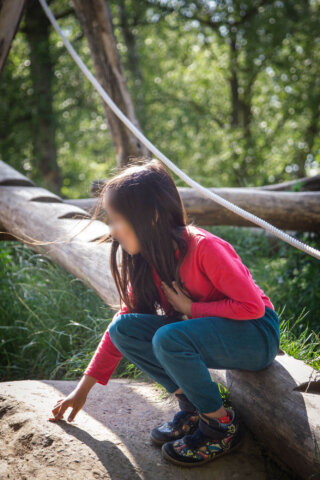
Straal is more than a school. It is a place where children grow up in direct connection with nature, rhythm, seasons, and community. The learning environment was developed from the belief that education also takes place outside the classroom walls.
This vision was translated into a landscape that is as educational as it is playful, as wild as it is carefully designed.
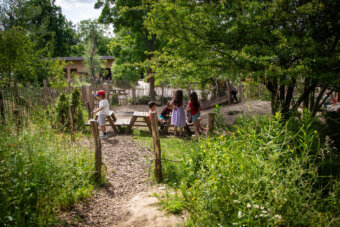
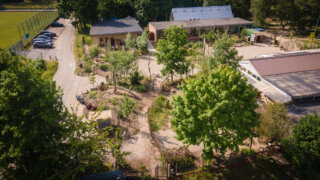
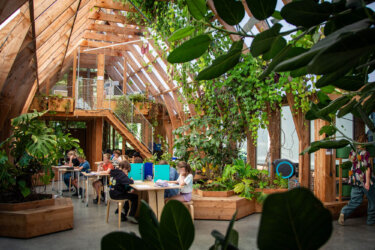
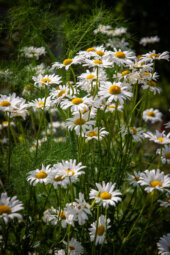
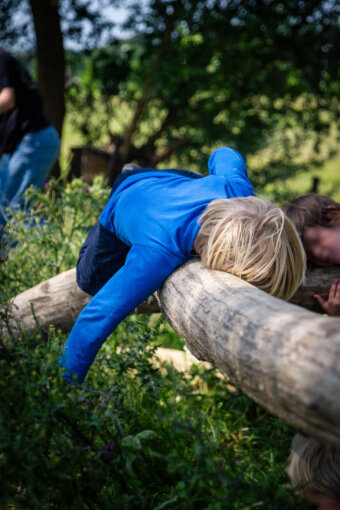
The school is nestled in a green setting with a vegetable garden, a flower garden with native species, sports fields, a play forest, and a young food forest. Scattered across the site are unique outdoor classrooms: the greenhouse classroom, where carnivorous plants and lianas grow up to the roof; an earthen classroom on stilts; a 12-sided temple classroom; a two-level robinia classroom; and a tree classroom with a tube slide. Each of these spaces is designed as a learning tool in itself, tailored to the child’s natural curiosity.


A distinctive aspect of this project is the intensive collaboration with parents, teachers, and children. The buildings themselves were, under guidance, co-built by the school community. This participatory approach not only fostered a stronger sense of ownership but also shaped the design: open, playful, human-scaled, and with a strong focus on sensory experience.
For us, Straal is not a conventional school project but a living organism. In this shared dream of parents, children, designers, and teachers, we discovered a form of collaboration that is rare and that gives the project its unique character.